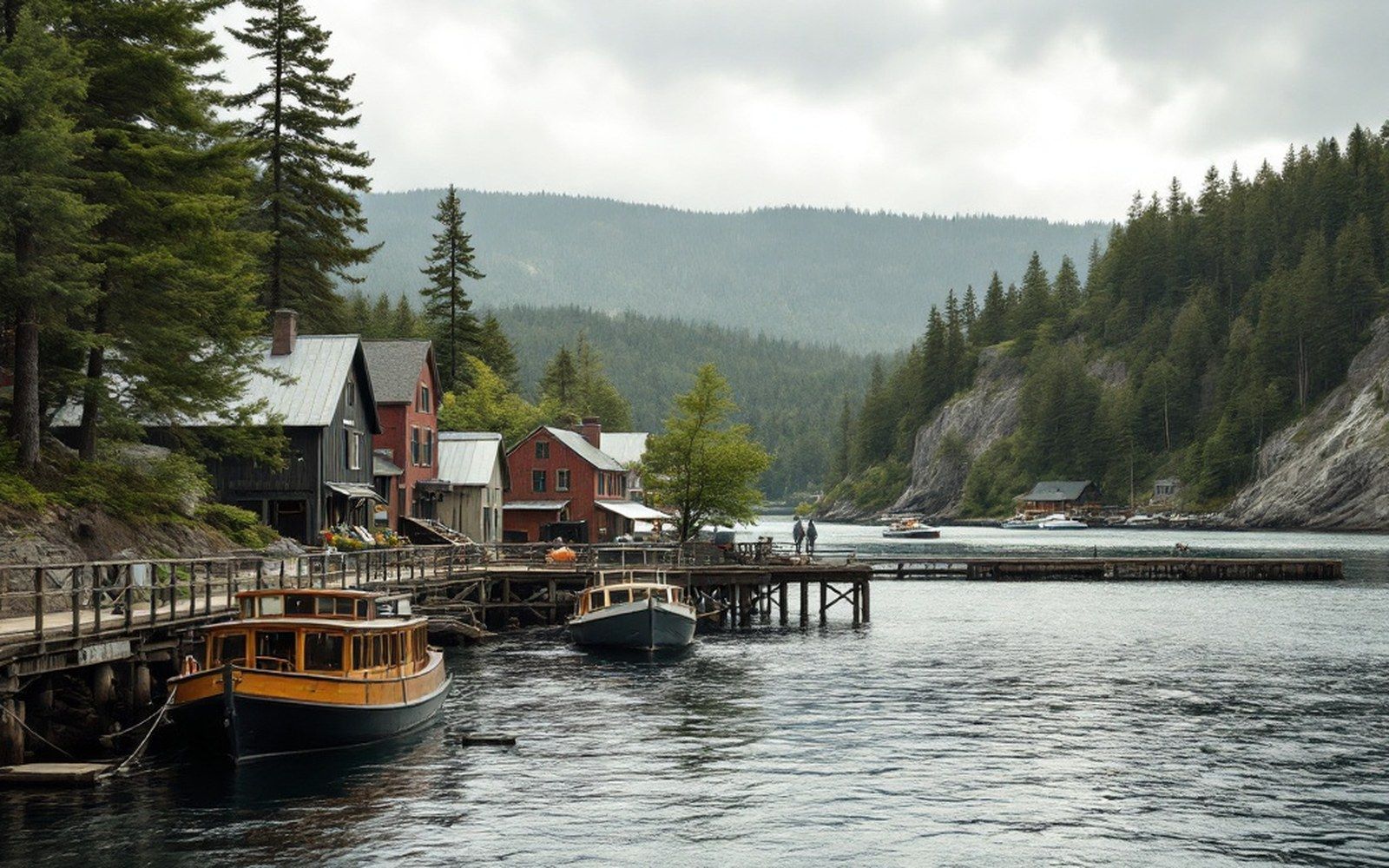
Every hull on this lake spends two-thirds of its life in a shed
Winnipesaukee freezes, and the math that follows is simple: four months of open water, eight months of storage.
The season the ice sets
Lake Winnipesaukee ↗ is a glacial basin — shallow in its reaches between the two hundred and fifty-three islands, deep along the old river channels — and its thermal behavior follows accordingly. The shallows freeze first, typically by January, and the main body closes over in most winters. By mid-spring the ice goes out in a few violent weeks of expansion and crack, after which the water is open but cold enough to matter.
The working season runs roughly Memorial Day to Columbus Day. That is the four months. Every boat launched in late May comes back out of the water in October, and the pull-out dates on most facilities are fixed by facility liability, not by temperature — the water is still technically navigable when the boats come off.
What the math does to the trade
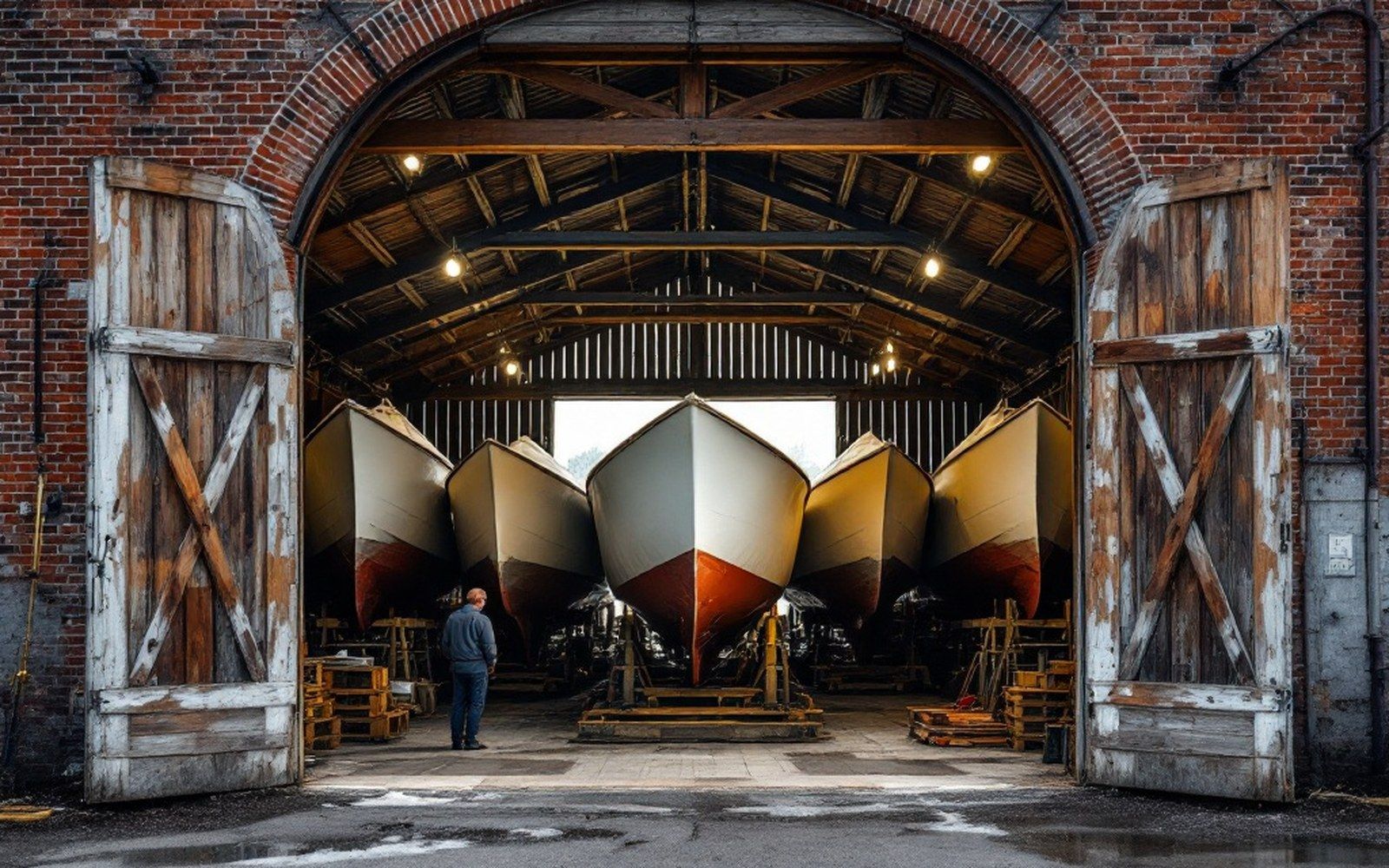
Eight months ashore means that dry storage — a climate-controlled shed, ideally heated to prevent cracking in fiberglass laminates and shrinkage in wooden frames — is not a luxury but a structural part of owning anything on Winnipesaukee. The facilities that grew around the lake's perimeter reflect this. Meredith Bay ↗ and its shoreline carry structures whose scale is determined less by summer use than by the need to stack and shelter the winter fleet.
Historically, wooden hulls required more care: canvas covers, oiled brightwork, bilge ventilation to prevent rot. The shift to fiberglass through the mid-twentieth century simplified storage somewhat, but the season's logic did not change. A hard freeze forces the same annual rhythm regardless of hull material — haul-out, winterize, cover, store, relaunch — and the facilities that service this cycle are among the most durable commercial forms on the lake's edge.
Chronology of the season
- Memorial Dayconventional launch window opens
- January (typical)shallow water freezes first
- Winter (most years)main basin closes over
- Mid-springice-out, usually a few violent weeks
- Columbus Dayconventional haul-out deadline on most facilities
The ratio that governs everything
The hull ratio — four months working, eight months stored — shapes insurance valuations, marina berth pricing, and what a boat owner actually spends per hour of use. Spread purchase, insurance and storage across roughly 120 days of viable season, and the per-day cost of ownership is considerably higher than a temperate-latitude comparison would suggest. New Hampshire records this climate reality plainly in its ice-out data, maintained by the Department of Environmental Services, which logs freeze and thaw dates for Winnipesaukee going back well into the nineteenth century.
The shed, in other words, is not a convenience. It is half the building program of the entire lake.