The branch that turned a mill town into a resort

A spur line rewrites the logic of a place
Meredith spent its first productive decades defined entirely by gravity — by the drop from Lake Waukewan to the bay and the wheel pits that captured it. The town's geometry followed the watercourse: mills at the fall, housing clustered above, wharves where the bay let boats work. Then a railroad branch arrived, and a different logic took over. Passengers now moved faster and more predictably than goods ever had by water. The people who came were not there to move freight; they were there to be on the lake. The architecture answered.
The Boston, Concord and Montreal Railroad pushed its main line through the Lakes Region in 1848, threading the easier grades to the south of Winnipesaukee. Meredith sat just far enough off the main corridor to require a branch, and the branch — a short spur connecting the town to the main line at Meredith Junction — arrived in the early 1850s. Branch lines ↗ in New England were often marginal propositions, built to serve specific industrial traffic and abandoned when the industry moved. The Meredith branch was different because what it served was the lake itself, and the lake did not move.
The train and the steamboat working together
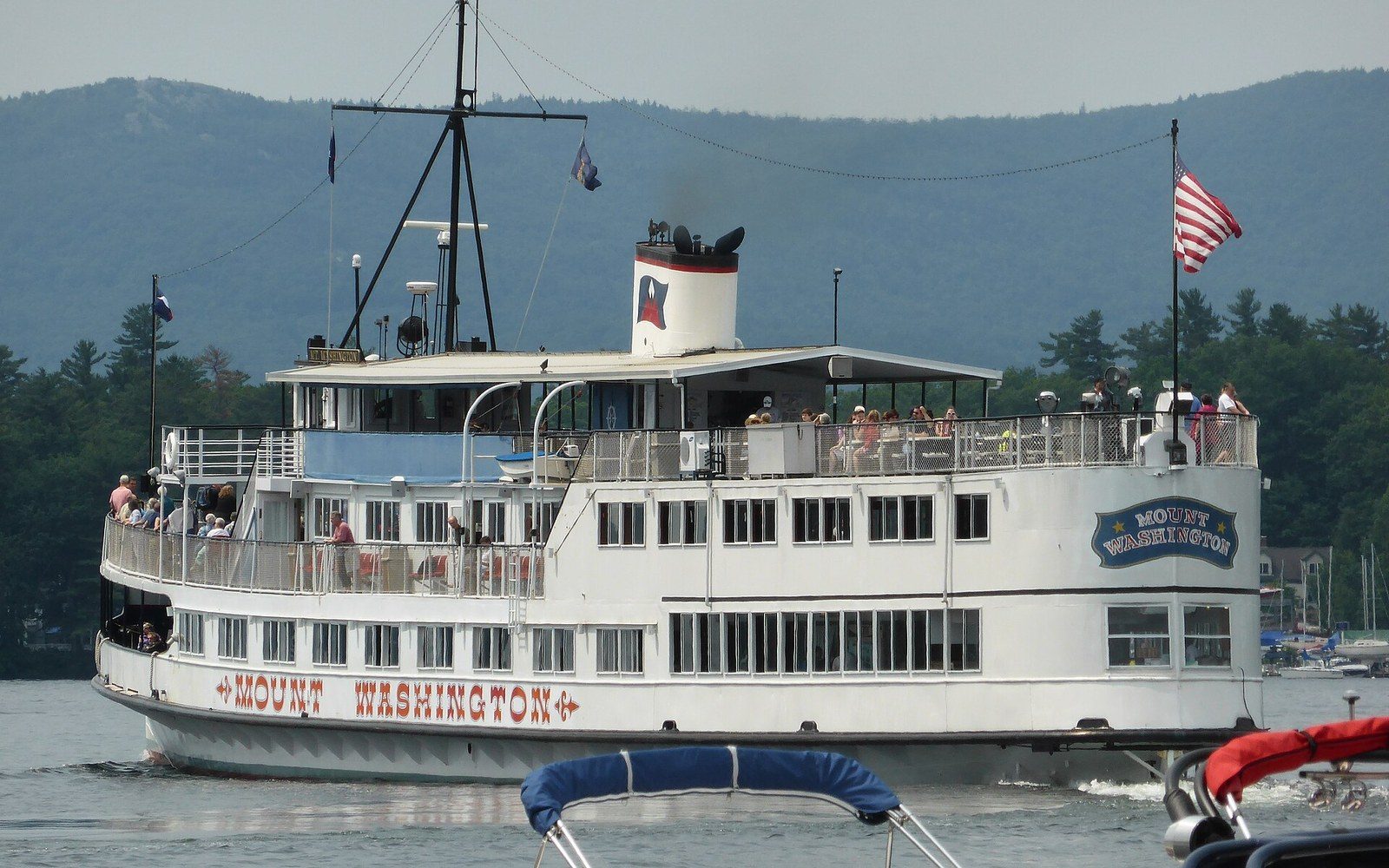
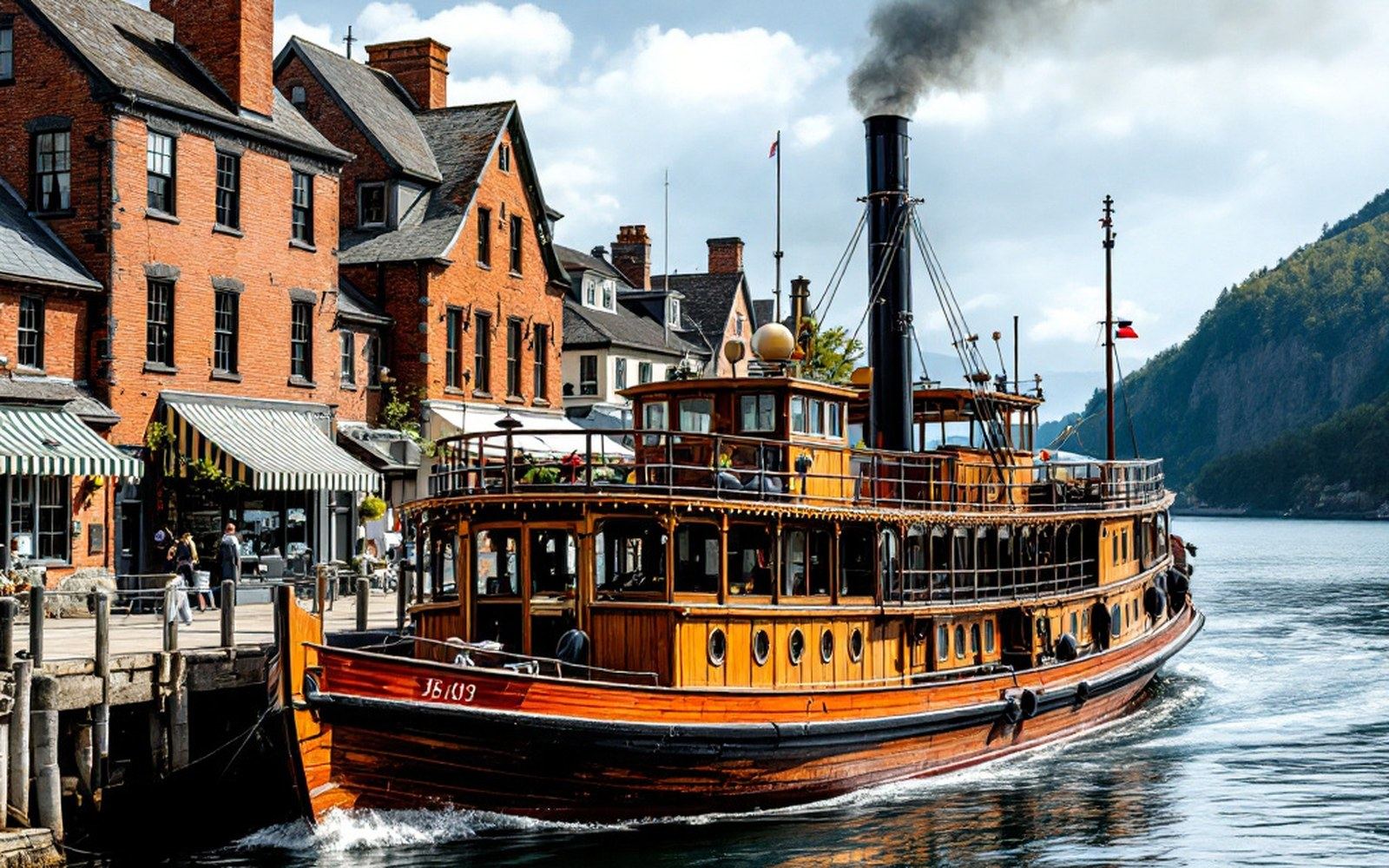
The economic logic was straightforward once the infrastructure was in place. A traveler from Boston could reach the junction, transfer to the branch, and arrive at a lakeshore wharf within a single day. The steamer network on Winnipesaukee — the Mount Washington being its most durable expression — met the trains at the wharf. The two systems composed into a single circuit that moved summer people from the city to the islands and back with enough reliability to make planning a season's visit reasonable rather than adventurous.
The effect on Meredith was not that the mills disappeared — they did not, at least not immediately — but that a second economy grew alongside them and eventually outpaced them. The mill block on the channel had been built to process wool and linen; the buildings that began filling the streets above the waterfront through the 1860s and 1870s were built to house, feed, and entertain people who had money and time. These were not the same structures, and they were not built the same way. Summer hotels needed width for porches and height for ventilation; they needed visible siting — on a ridge or at a point where the view carried — not proximity to a wheel pit.
Chronology
- 1848Boston, Concord and Montreal Railroad reaches the Lakes Region on its main line
- Early 1850sMeredith branch spur opens, connecting town to Meredith Junction
- 1860s–1870sResort-era hotel and boarding-house construction accelerates
- Late 19th centuryBranch absorbed into Boston and Maine Railroad system
- 20th centuryPassenger service declines as automobile travel displaces the train; depot eventually demolished
Architecture as evidence
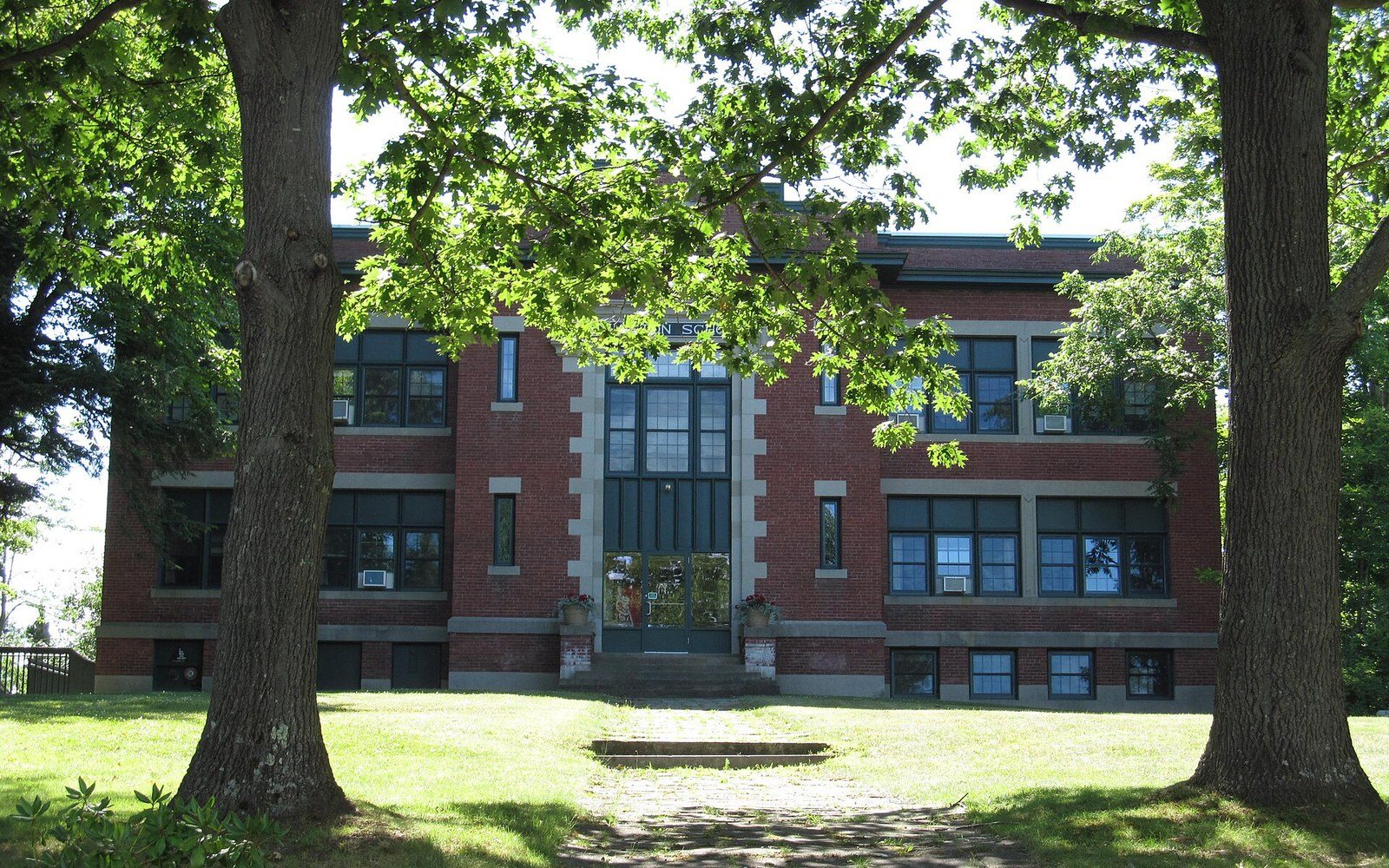
The buildings that survive from the resort era read differently from the mill-era fabric. The mill block is load-bearing and narrow-windowed, its proportions dictated by the machinery inside and the need to concentrate the structural span over a short footprint. The hotels and boarding houses that went up through the last quarter of the nineteenth century are wider in plan, with generous fenestration and, in the grander examples, verandas that wrap more than one elevation. They were oriented to prospect rather than to process. The difference is visible in the rooflines — the mill block runs flat and horizontal; the resort buildings reach for dormers and cupolas that give height without structural necessity.
The Meredith Historic District ↗, as documented in the National Register survey, captures the layering: commercial blocks that began as dry-goods and hardware stores serving working families are sandwiched between later buildings retrofitted for seasonal trade, their ground floors widened into lobbies and their upper floors subdivided for paying guests. The street reads, at close inspection, as a record of two economies occupying the same frontage at different moments.
The railroad also changed where Meredith grew. Before the branch, the logic of settlement pulled toward the fall and the channel. After it, the gravitational center shifted toward the depot, which sat somewhat apart from the old mill district. Streets developed between the depot and the water, infilling with a mixture of boarding houses, livery operations, and small commercial structures oriented to the summer trade. The gradient of land use — manufacturing nearest the fall, retail and hospitality above, residential above that — was not erased, but it was complicated by a second node of activity organized around the station.
What the shift left behind
Manufacturing in Meredith did not collapse with the arrival of summer tourism; it contracted over a longer arc. The woolen mills ran into the second half of the nineteenth century, and smaller trades — woodworking, light metalwork, the supply of boats and equipment to the lake trade itself — persisted well into the twentieth. But the branch line had fundamentally altered what the town was for. By the 1880s and 1890s, the summer season was generating enough revenue to justify investment in infrastructure that served it specifically: improved wharves, carriage roads to outlying points, the expansion of hotel capacity. The mills, by contrast, were not receiving equivalent reinvestment. The physical fabric reflects this: the mill-era stonework is robust and unrepeated, while the resort-era buildings were built quickly, of wood, and in some cases demolished and replaced within a generation as fashion shifted and different guests required different amenities.
Built fabric, two phases
The branch line itself was eventually absorbed into the Boston and Maine Railroad ↗ system, which consolidated most of New England's regional rail through the late nineteenth and early twentieth centuries. Passenger service continued into the twentieth century, then contracted as automobile ownership made the train unnecessary for most summer visitors. The depot eventually came down. What remained was a town whose street plan, building stock, and relationship to the water had been permanently reconfigured by four decades of rail-driven summer traffic.
The mill town and the resort town did not succeed each other cleanly — they overlapped for long enough that the built record carries both. A careful walk from the channel to the old depot route passes through at least three distinct phases of construction logic: the industrial stonework of the waterfall district, the transitional commercial blocks of the mid-century, and the wood-framed resort buildings of the late nineteenth century, each cohort shaped by a different set of pressures and a different idea of who Meredith was for. The railroad did not create the lake or the view, but it created the market for both — and the town's buildings are the ledger.