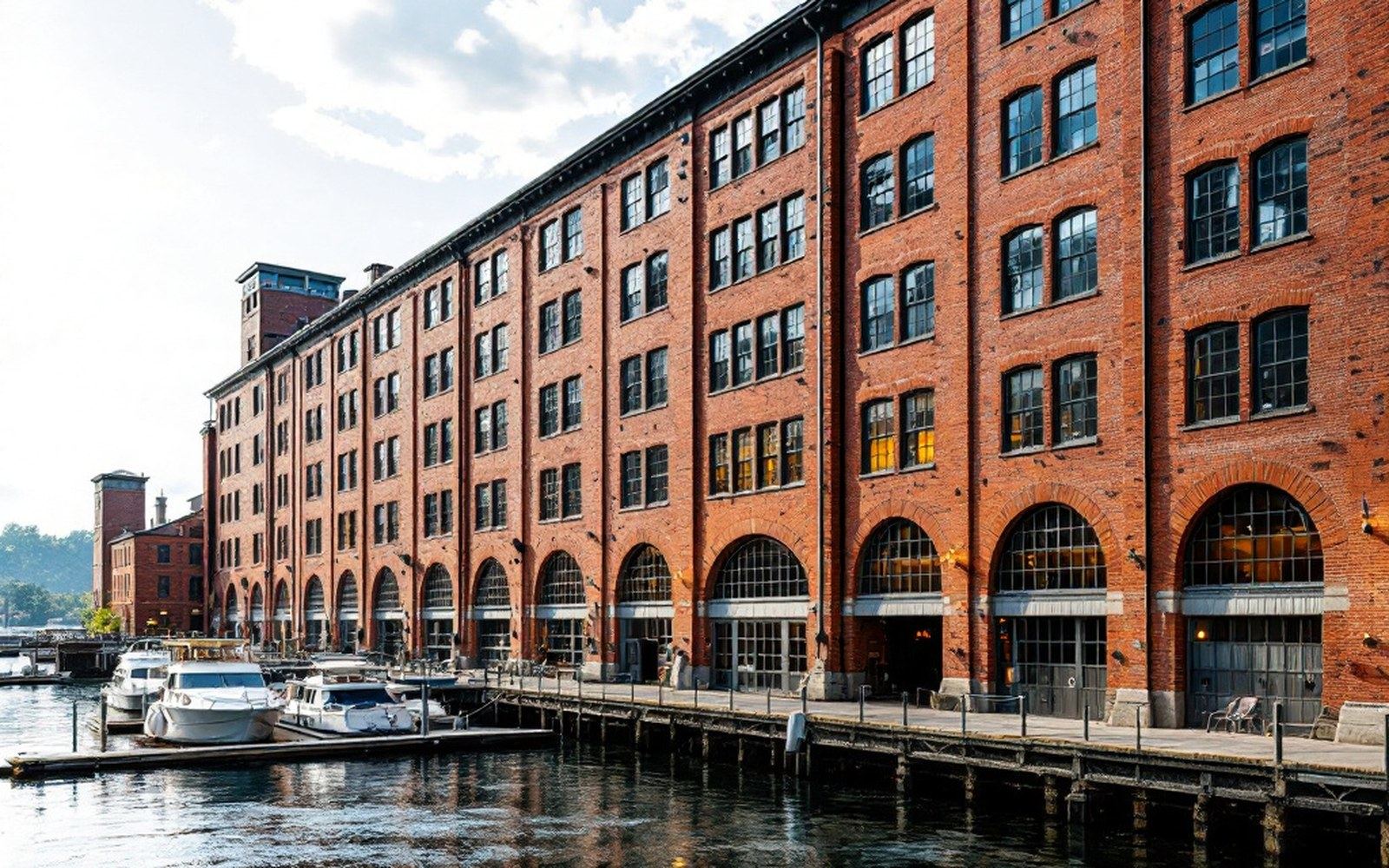
Two hundred and fifty-three islands
The granite underneath all of it
Meredith's lakeside towns were built from the ledge they sat on — the same glacially scoured granite that lines the mill foundations and fills the island stone walls.
The ledge and what came from it
Belknap County ↗ sits on a shelf of granite that the last glaciation scraped clean and left exposed in outcrops, island ridges and the ledge faces that mill builders used as ready-made footings. The rock beneath Lake Winnipesaukee ↗ is not one formation but several granites and related rocks, and it surfaces across the two hundred and fifty-three islands of the glacial basin — wave-polished along the waterline, lichen-grey above it. Nineteenth-century builders did not need to import stone; they quarried it from the ground they were already clearing.
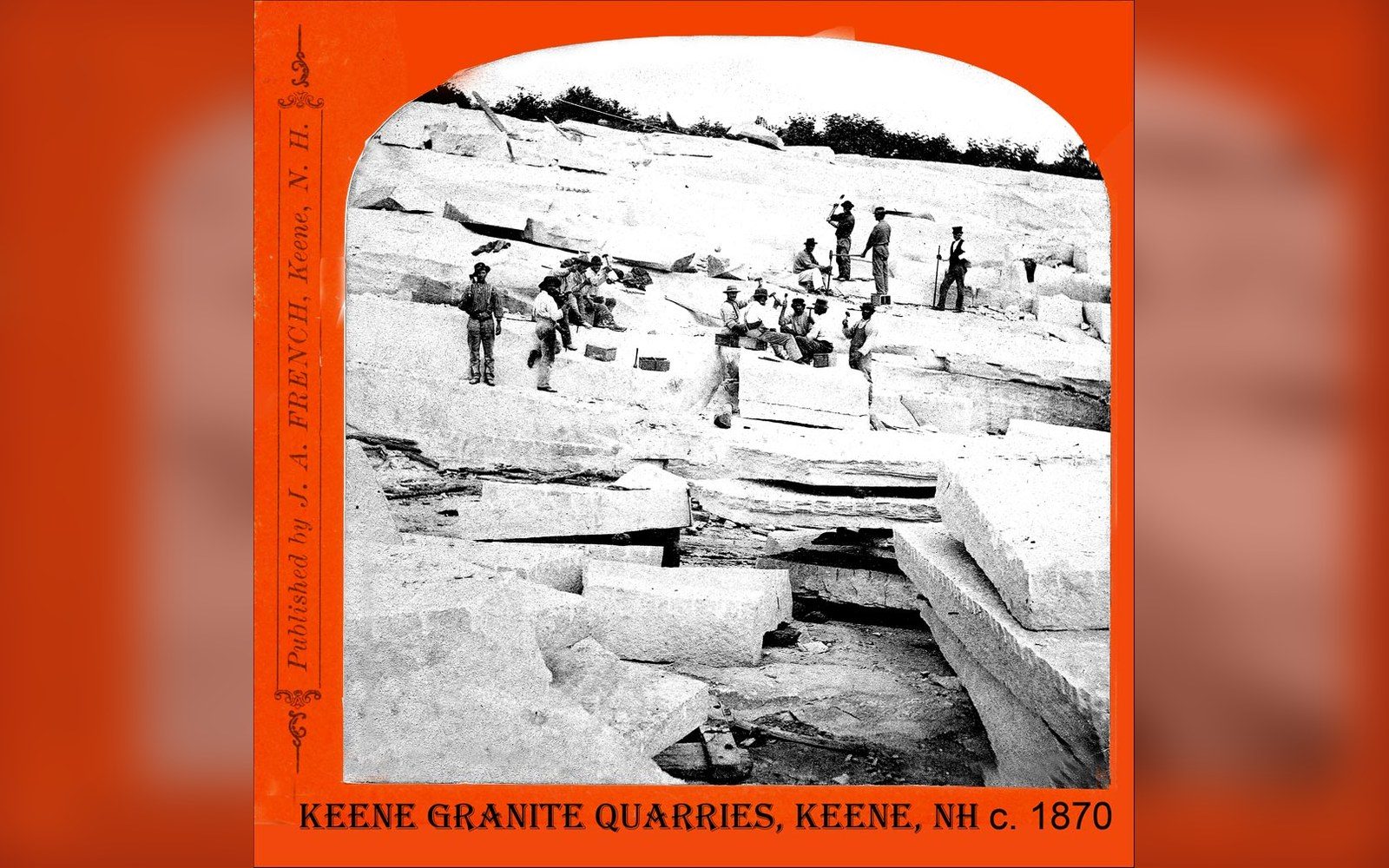
Small-scale granite extraction ran throughout the lakes region before the Civil War, supplying local foundations, bridge abutments and mill dam facings rather than the large monument trade that defined Concord and Milford. Meredith's mill stonework — the wheel pit lining, the sluice gate cheeks, the channel walls — came from outcrops within a short haul of the site. The surviving stonework at the fall is dry-laid and hammer-dressed to tolerances that reflect skilled local masons rather than any quarry finishing yard. Granite of this kind does not announce itself; it simply does not fail.

The islands complicated extraction. On Bear Island and the larger bodies of land in Meredith Bay, settlers quarried the surface ledge for house foundations and the low stone walls that cross-hatched their cleared fields. Moving dressed stone off an island required a boat and a calm day; most of what was cut there stayed there. The result is a building record that is almost perfectly local — each island's structures are made of the island's own rock, and a mason reading the walls can follow the decision to stop at a particular seam or work around a feldspar inclusion rather than split through it.
The branch-line railroad that reshaped Meredith in the second half of the nineteenth century brought in brick for commercial facades and balloon-frame lumber for summer cottages, and granite slowly receded as a primary building material. But the mill block kept its stone lower courses, and the channel walls that still run beneath the village centre are the same granite laid when the machinery was new. The ledge is not visible in the finished streetscape, but it is load-bearing throughout: Granite of one kind or another underlies much of the lakes region, which is part of why the buildings that rest on it have stood so well.
Chronology
- Pre-Civil Warlocal quarrying supplies foundations, mill stonework, dam facings
- Mid-to-late 19th centuryrailroad introduces brick and timber; granite use declines for new commercial construction
- Ongoingmill channel walls and lower courses of the mill block remain original stone