What the water actually powered
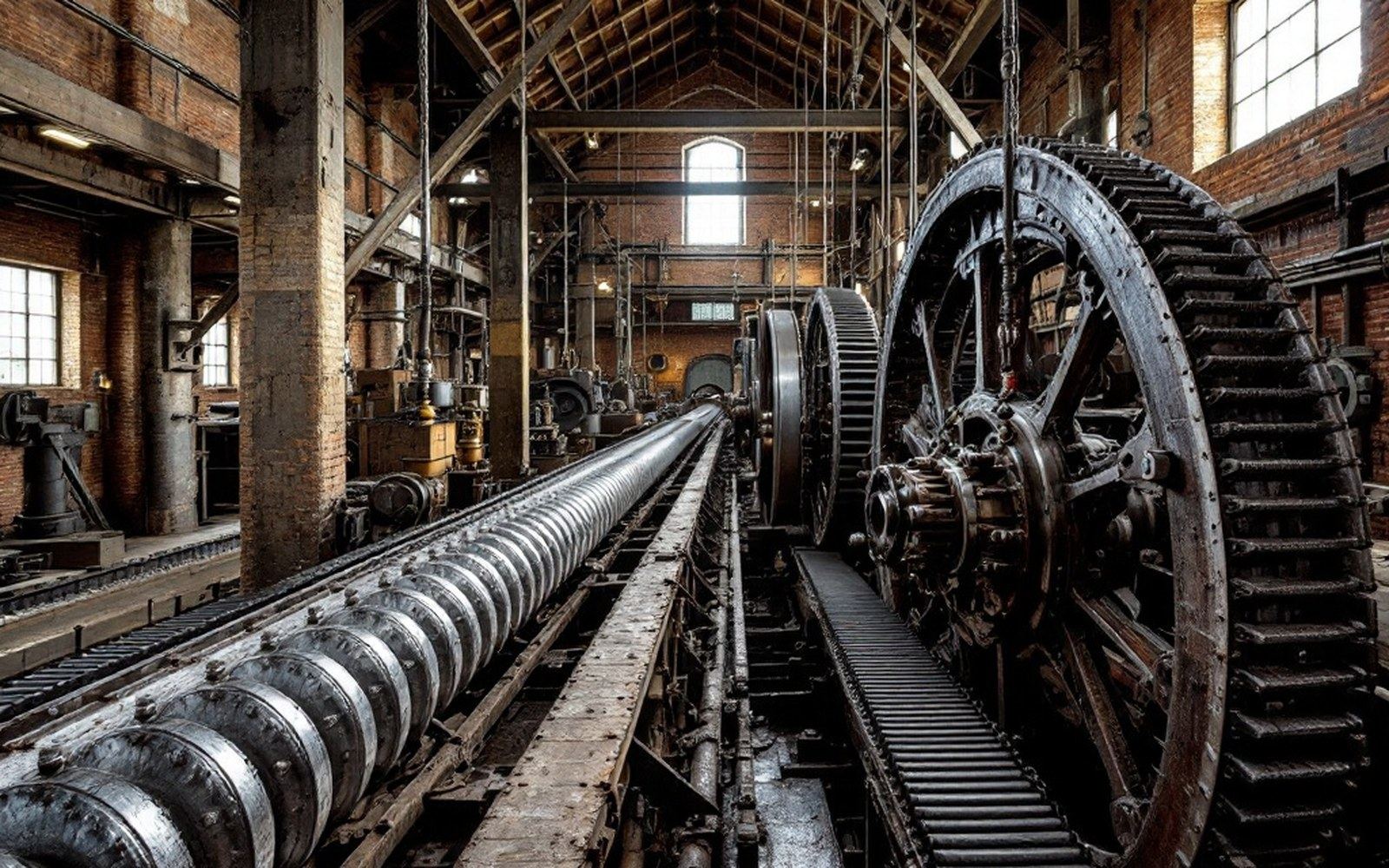
From linen to wool: the documented sequence of Meredith's mill trades
The drop from Lake Waukewan to Meredith Bay is roughly eighteen feet, and for the better part of a century that figure determined what the town made for a living. Water falling through a controlled sluice turns a wheel; a wheel turns a shaft; a shaft drives machinery — and the machinery Meredith men chose to install, in sequence, tells the story of the regional economy as clearly as any account book.
The earliest recorded use of the fall was for linen. Flax was grown across Belknap County ↗ in the late eighteenth and early nineteenth centuries, and Meredith's first mills dressed and spun it. Linen manufacture required comparatively modest power — the head of water at the fall was more than adequate — and it served a domestic market: cloth for shirts, ticking, heavy working fabric. Town records and the early county histories place linen works at the village fall before 1810. The trade was never large by regional standards, but it was the reason the mill bay was staked out and the first stone-walled wheel pit was cut.
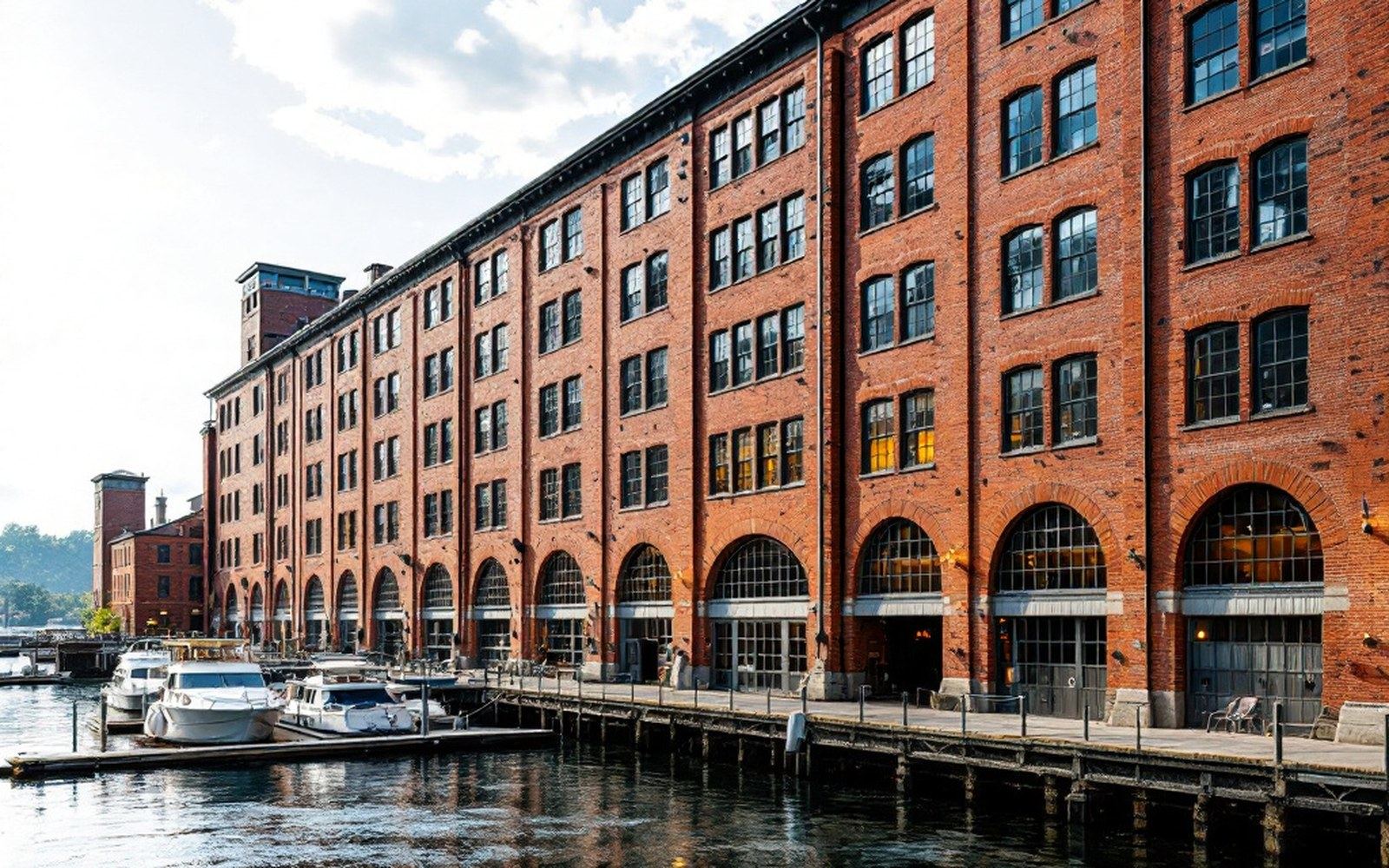
Wool displaced linen as the primary product well before mid-century. The shift tracked national patterns: merino sheep had been introduced widely across New England after about 1810, raw wool supply expanded, and carding and fulling became the growth trades. A fuller works the cloth after weaving — scouring, beating and thickening it — and fulling mills are heavy consumers of rotary power delivered steadily. The Meredith fall, controlled through sluice gates that could be opened or throttled to match demand, suited the work. Carding mills, which combed raw fleece into rovings ready for spinning, ran alongside. The two operations often shared a building or at least a millpond, and the mill block that survives on the village street reflects the scale wool manufacturing reached by the 1840s.
Smaller trades, the same water
Wool and linen are the headline sequence, but the watercourse drove a wider range of machinery than either suggests. Sawmilling ran concurrently with textile production almost from the beginning — lumber was a constant local need and the fall was always there when the cloth machinery was idle or seasonal demand dropped. A gristmill appears in the record before 1820, grinding grain for the farms inland from the bay. These were not competing with the textile trades so much as filling the same wheel pit at different hours or different seasons, the sluice gates parceling out the available head of water among tenants who each held a defined right to draw on it.
Chronology
- Pre-1810linen works at the village fall, earliest documented mill use
- After 1810merino sheep introduced across New England; wool trade expands
- By 1840scarding and fulling dominant; mill block at its full scale
- Pre-1820gristmill in the record
- 1840sbranch line arrives; shipping costs fall, mill market widens
- 1870s onwardmanufacturing gives way to resort economy
Later in the nineteenth century the smaller tenancies multiplied: a turning shop using the shaft drive for lathes, a small iron works, and eventually a shingle mill. None of these left the same documentary trail the textile operations did, but they appear in the town's tax valuations and in scattered deed records that describe machinery rights attached to specific lots along the channel. What the records make clear is that the fall was understood as productive infrastructure — something to be allocated, licensed and taxed — rather than a natural feature that happened to be convenient.
The branch line that reached Meredith in the 1840s did not immediately disrupt the water-powered trades; it extended their market for a decade or more by making shipping cheaper. What it eventually did was introduce a competing logic: coal-fired steam mills elsewhere could run year-round without ice, without drought and without the maintenance a stone-and-timber wheel pit demanded. By the 1870s, Meredith's manufacturing economy was already tilting toward the summer visitor trade the railroad had also made possible, and the glacial basin of Lake Winnipesaukee ↗ was becoming a destination rather than a working watershed. The fall kept running — it still does — but what it powered had quietly changed.
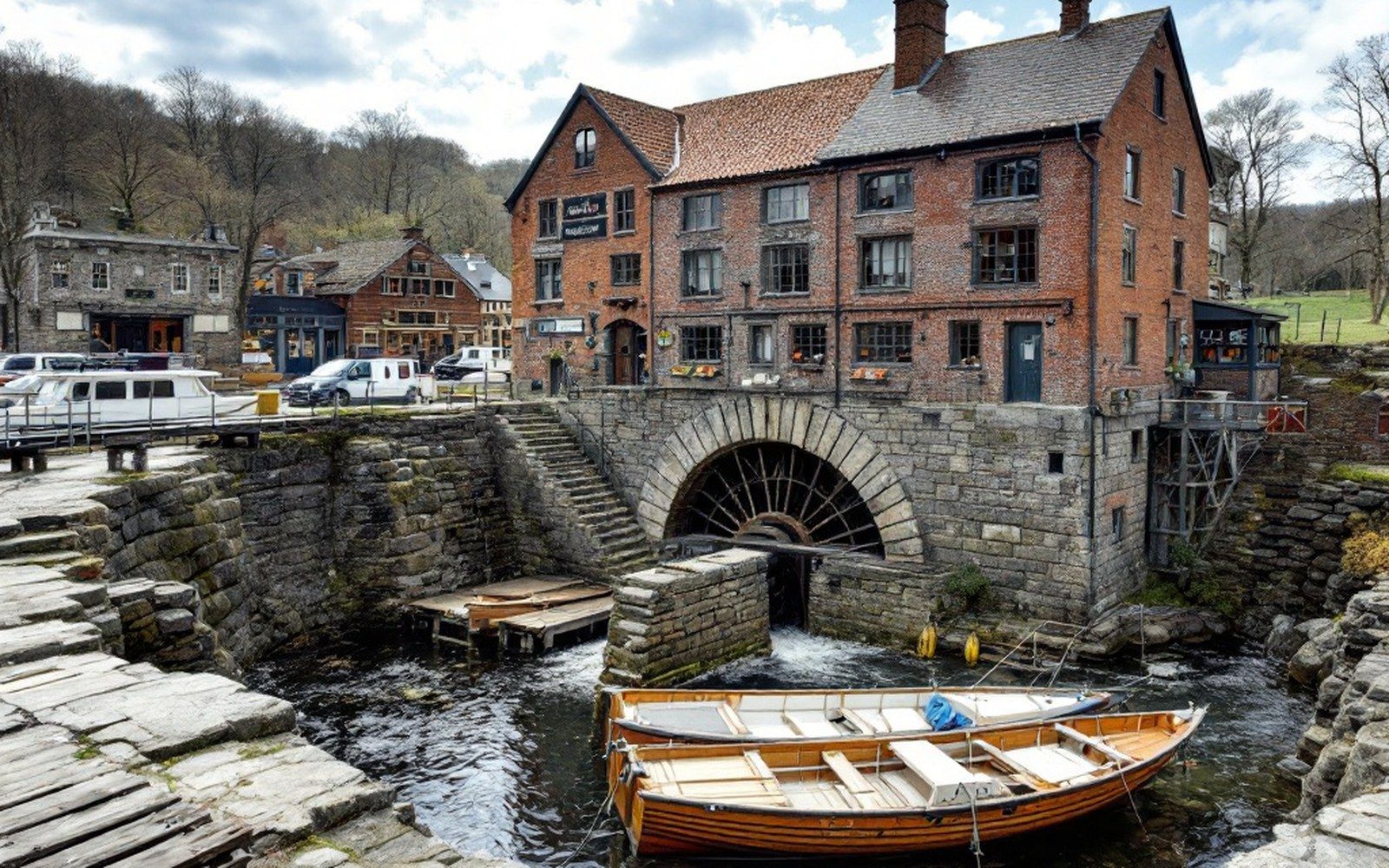
The machinery sequence
| Linen dressing and spinning | modest power, domestic market |
|---|---|
| Fulling | heavy rotary demand, required steady head of water |
| Carding | raw fleece to rovings, typically alongside fulling |
| Sawmilling | concurrent with textiles, used idle capacity |
| Gristmill | grain for inland farms |
| Later small trades | turning shop, iron works, shingle mill |